Montgomery Castle
Visitor Notice
Montgomery Castle is currently closed due to poor weather conditions.
We are monitoring the situation and will update you when it is safe for you to visit.
Thank you.
More than the sum of its parts
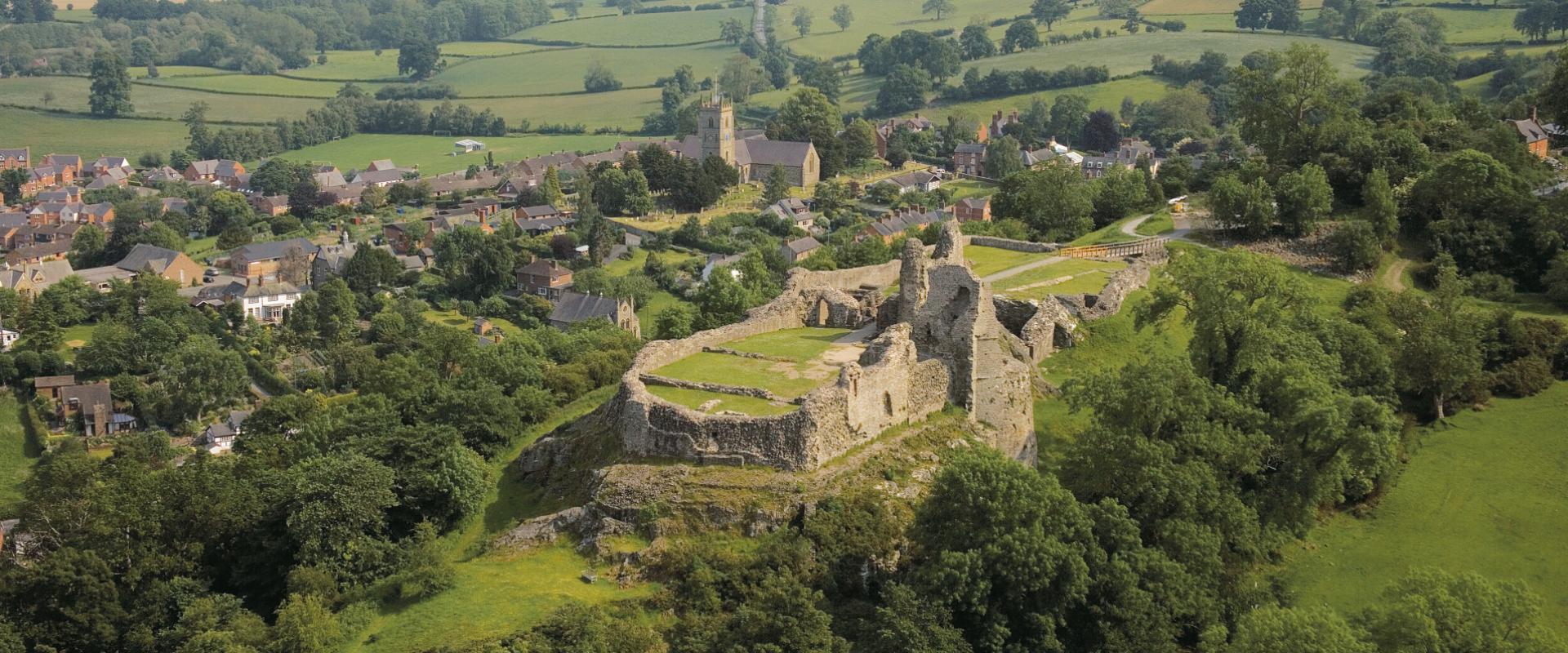
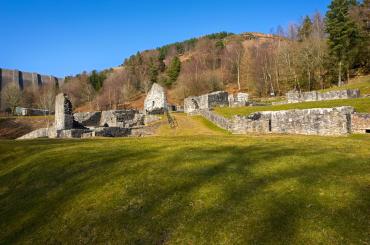
Montgomery is one of those castles that, even in ruin, retain a powerful atmosphere and presence that transcend its state of preservation. Perhaps it’s something to do with its location, on a steep crag above a pretty Georgian town with all-seeing views across the Welsh border.
Commenced around 1223 on the orders of Henry III in response to the growing power of Welsh native prince Llywelyn ap Iorwerth (Llywelyn the Great), Montgomery’s stone castle replaced a nearby wooden fort known as Hen Domen. Perched on its rocky ridge, this new fortress was significantly sturdier and more sophisticated, with a stone inner ward, well, deep defensive ditches crossed by drawbridges and walled town.
The castle remained in use for centuries, surviving attacks by Llywelyn in 1228 and 1231 and Llywelyn’s son Dafydd in 1245. The castle’s ultimate end came during the Civil War, when it fell to the Parliamentarians and was demolished in 1649, leaving just the crumbling towers and low walls that stand today.
Opening times & prices
Opening times
| 1st April - 30th September | 10am–6pm |
|---|---|
| 1st October - 31st March | 10am–4pm |
|
Last admission 30 minutes before closing Closed 24, 25, 26 December and 1 January Please note: during extreme weather conditions we may need to close monuments at short notice, please check our social media channels before visiting to ensure the site is open and safe to visit. Facebook @CadwWales | X @cadwwales |
|
Visitor information

Bikes access
Bike storage area available in car park or close to site.

Car park
There is parking for approx .15 cars on site with one dedicated accessible parking space (approx. 100 metres).

Dogs welcome
Dogs on short leads welcome to access ground floor levels of the site.

EV charging points
Two Type 2 (22kW) electric charge points available in castle car park — charges for use apply.

Walking difficulty
Terrain: Level 2 – Easy

Drone policy
Please read our policy information about flying drones at Cadw monuments: read the guidance

No smoking
Smoking is not permitted.

Health & Safety
Access to and within the castle is via several wooden bridges. Some areas require crossing low historic stonework, which can be slippery when wet; please proceed with caution.
The castle is situated above deep ditches, so do not climb or breach the outer stone walls due to fall risks.
The lower ditch is only accessible after venturing down some steep grassed banks.
As with all ancient monuments there is always a risk of stones being dislodged in bad weather, however, we manage this through extensive monitoring.
Climbing may result in serious injury.
There are several wild plants and flowers, although these are great pollinators, they may be poisonous to visitors and animals, we strongly advise you not to touch or allow dogs to eat any vegetation.
Please watch our health & safety film before visiting Cadw sites.
Iechyd a Diogelwch / Health and Safety
Please report any anti-social behaviour such as climbing, setting fires, graffiti etc. to CadwAccidentsReports@gov.wales
The following signs can be found around the site at key areas of risk, please pay attention where appropriate.

Slippery or uneven surfaces
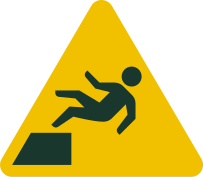
Falls from height
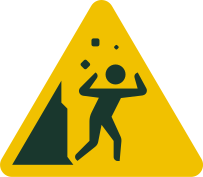
Falling masonry
Directions
Google MapPostcode SY15 6HN
what3words: ///stared.nest.crumb
Unlimited access to Wales' past
Join Cadw for as little as £2.00 a month and gain unlimited access to over 100 historical sites.
Enjoy the many benefits of Cadw membership
- 10% off Cadw gift shops
- 50% off entry to English Heritage and Historic Scotland sites
- FREE entry to English Heritage and Historic Scotland on renewal
- FREE entry to Manx National Heritage properties
- FREE membership pack including car sticker and full colour map