Caer-went Roman Town
Visitor Notice
Overnight camping is not permitted within the grounds of Caer-went Roman Town (this includes tents, camper vans and motorhomes).
Thank you.
A glimpse into a Romanised market town
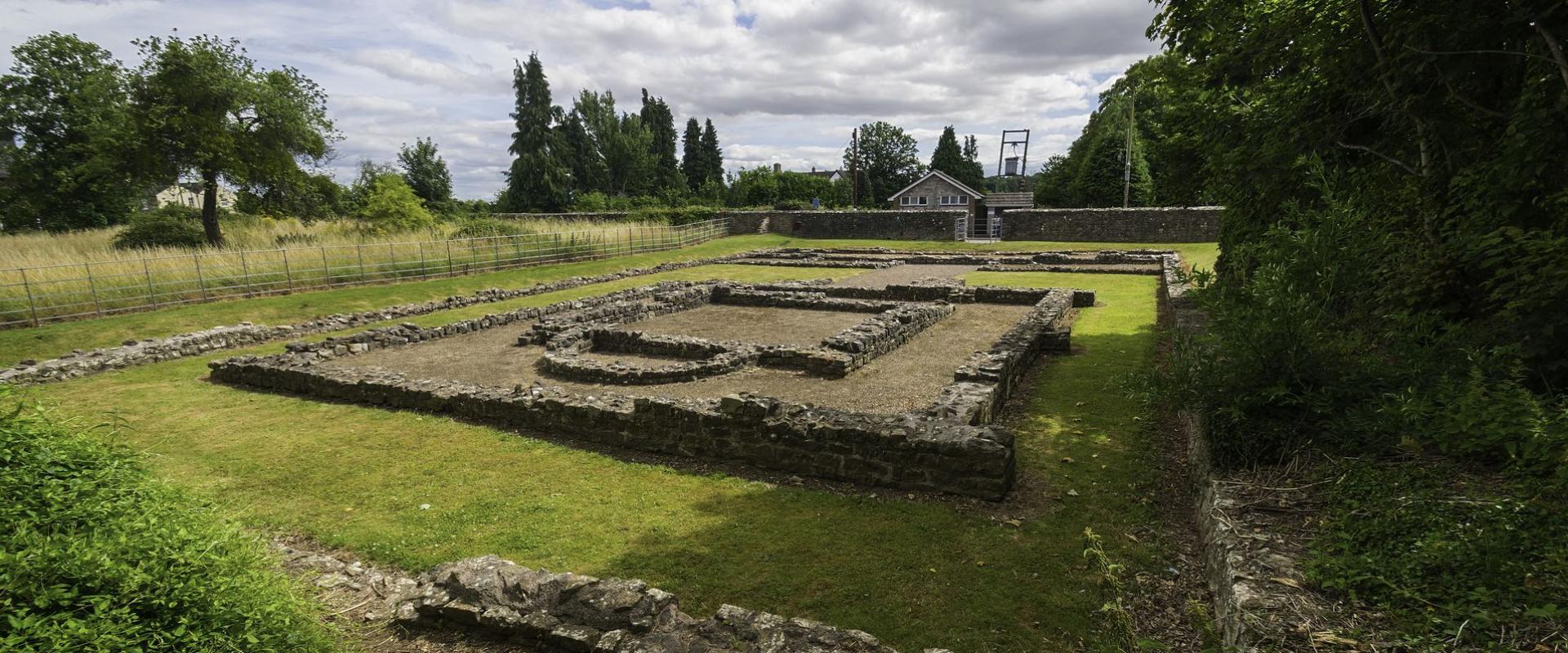
Perhaps its sleepy location in off-the-beaten-track rural border country is the reason why Caerwent, Venta Silurum to the Romans, is one of those ‘best kept’ secrets. Its thunder has certainly been stolen by nearby Caerleon (Isca), one of Britain’s most important Roman towns. Caer-went, established in about AD 75–80, served as a settlement of the Silures, a native tribe who became Romanised following the conquest of Britain. It was a busy place complete with public baths, spread out in a typical well-ordered Roman grid.
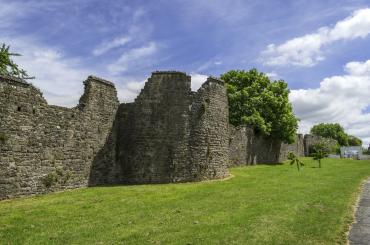
Impressive remains include walls still standing up to 17ft/5m, excavated houses, market-place and Romano-British temple.
Opening times & prices
Opening times
| 1st April - 31st March | 10am - 4pm |
|---|---|
|
Closed 24, 25, 26 December and 1 January. |
|
Visitor information

Bikes access

Car park
Daily 10am–4pm
Overnight camping is not permitted within the grounds of Caer-went Roman Town. This includes tents, camper vans and motorhomes.
Thank you.

Disabled person access

Dogs welcome

Toilets
Open daily 10am–4pm

Walking difficulty
Terrain: Level 3 — Moderate

Picnic tables

Drone policy

No smoking

Health & Safety
Sections of this monument are visible throughout the town. The route starts by crossing the main road and continuing into the beginning of the walled section.
Access to the top of the walls requires using several sets of steps. The grassy path can become slippery in wet weather, so appropriate footwear for site and weather conditions is recommended. Due to the ruinous condition of the walls, visitors are advised to stay in the centre of the path.
It is also possible to walk below the walls along a lower, more accessible grassy route. The route includes several areas with camp remains; caution is advised as low thresholds may sometimes not be visible. Climbing on or over the stonework should be avoided.
Whilst visiting the forum and basilica there is the opportunity to visit our meadows. Please adhere to signage displayed in this area.
As with all ancient monuments there is always a risk of stones being dislodged in bad weather, however, we manage this through extensive monitoring.
Climbing may result in serious injury.
There are several wild plants and flowers, although these are great pollinators, they may be poisonous to visitors and animals, we strongly advise you not to touch or allow dogs to eat any vegetation.
Please watch our health & safety film before visiting Cadw sites.
Iechyd a Diogelwch / Health and Safety
Please report any anti-social behaviour such as climbing, setting fires, graffiti etc. to CadwAccidentsReports@gov.wales
The following signs can be found around the site at key areas of risk, please pay attention where appropriate.
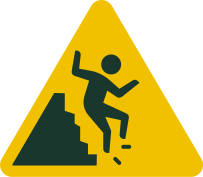
Steep and uneven steps

Falls from height

Slippery or uneven surfaces
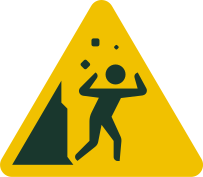
Falling masonry
Directions
Google MapRoad:
Follow signs off A48 between Newport and Chepstow
Rail:
Caldicot 4km/2.4mls
Bus:
Route number 73 Newport –Chepstow
Bike:
NCN Route No.4 (0.3mls/0.4km)
Postcode NP26 5BA.
what3words: ///property.brilliant.burns
For further information, please contact: Traveline Cymru on 0800 464 0000 or National Rail Enquiries on 03457 48 49 50.
What's on
View all events
Unlimited access to Wales' past
Join Cadw for as little as £2.00 a month and gain unlimited access to over 100 historical sites.
Enjoy the many benefits of Cadw membership
- 10% off Cadw gift shops
- 50% off entry to English Heritage and Historic Scotland sites
- FREE entry to English Heritage and Historic Scotland on renewal
- FREE entry to Manx National Heritage properties
- FREE membership pack including car sticker and full colour map