White Castle
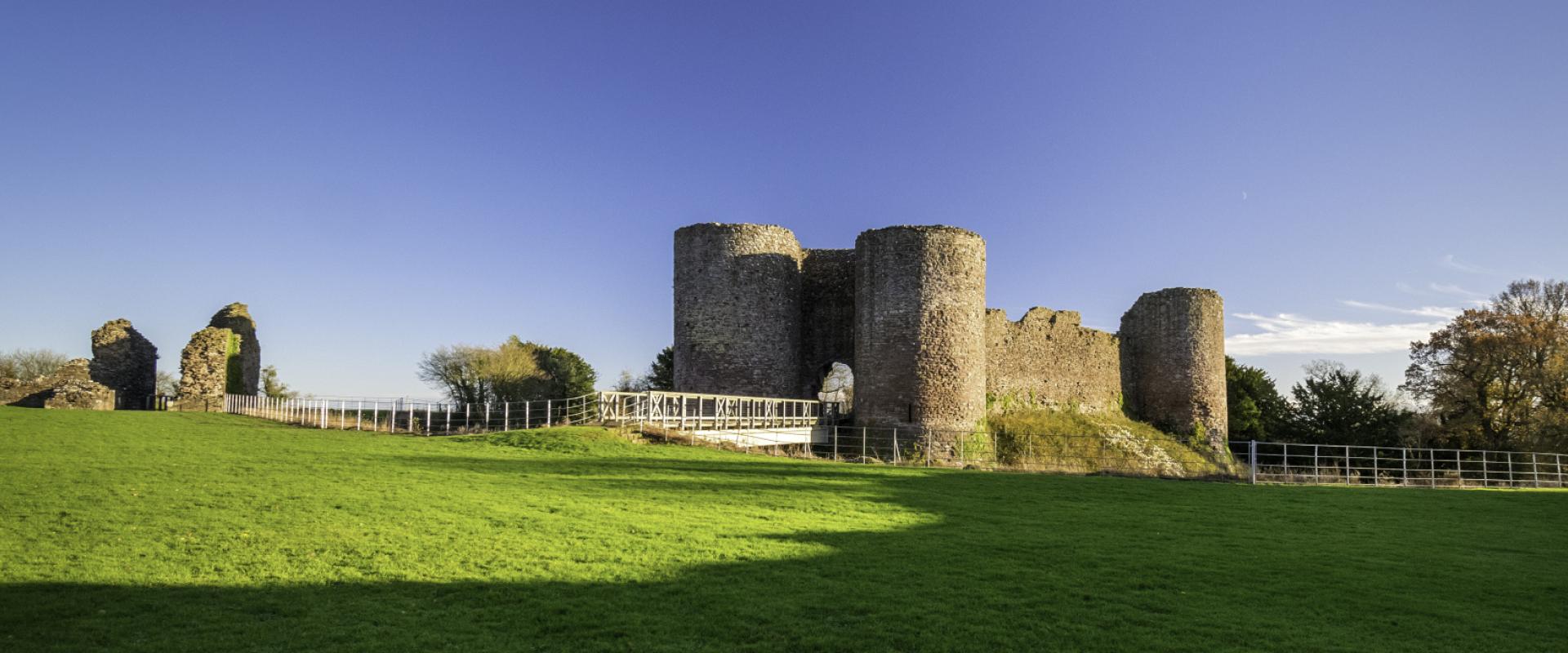
The shape of things to come? An early glimpse of Edward I’s Welsh castle-building project
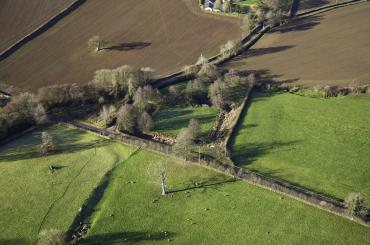
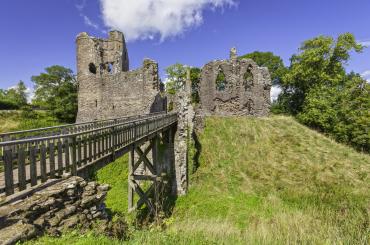
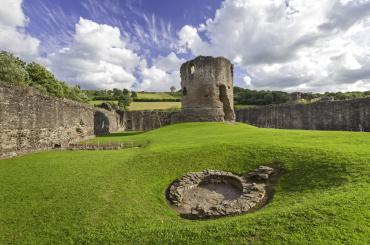
White Castle is the best preserved and most imposing of the trio of Monmouthshire fortresses known as the ‘Three Castles’ – which includes Grosmont and Skenfrith – built to control the border. Originally constructed from wood and earth, a series of renovations transformed it into the significant defensive structure we see today. Its medieval name might derive from the white rendering used on its masonry. The large outer ward is as big as a football pitch, while the pear-shaped inner ward sits behind a deep, steep-sided, water-filled moat.
Many of these features are thought to be the work of the Lord Edward (later King Edward I) who took possession of the Three Castles in 1254. The modifications at White Castle, his first Welsh castle, can be seen as a forerunner of the mighty fortresses he would go on to build in north Wales.
Opening times & prices
Opening times
| 1st April - 31st March | 10am–4pm |
|---|---|
|
Last admission 30 minutes before closing Closed 24, 25, 26 December and 1 January |
|
Visitor information

Bikes access
Bike storage area available in car park or close to site.

Car park
Parking for approx. 4 vehicles available. There is no dedicated disabled parking.

Disabled person access
Access is via a short gravelled path from a limited parking area. The main part of the castle is accessed via a bridge, crossing the water filled moat from the larger outer ward, which itself is reached via a small bridge, crossing a dry moat.
Mobility access is good to most areas.

Dogs welcome
Dogs on short leads welcome to access ground floor levels of the site.

Walking difficulty
Terrain: Level 2 – Easy

Picnic tables
Picnic benches and /or tables are available for visitor use.

Venue hire
This site is available to hire for events, filming and exhibitions.

Holiday accommodation
Cadw holiday accommodation is available to hire close to this site.

Drone policy
Please read our policy information about flying drones at Cadw monuments: read the guidance

No smoking
Smoking is not permitted.

Health & Safety
Parking is located directly outside the site. Passing through the main gate and following the path you will arrive at a small bridge that will take you through into the outer grassed ward. Surrounded by ruinous walls, there is always the risk of falling stone. We ask that you do no climb any of the stonework here, or within the monument.
A short set of steps at the rear of the outer ward will take you down to the lower moat level, this area may be overgrown and grounding uneven / muddy. We ask that you remain vigilant to your surroundings within this space.
Leading from the outer ward, the main bridge will take you over the moat and into the monument. The monument is relatively flat, however, there may be some ruinous low stonework.
As with all ancient monuments there is always a risk of stones being dislodged in bad weather, however, we manage this through extensive monitoring.
Climbing may result in serious injury.
There are several wild plants and flowers, although these are great pollinators, they may be poisonous to visitors and animals, we strongly advise you not to touch or allow dogs to eat any vegetation.
Please watch our health & safety film before visiting Cadw sites.
Iechyd a Diogelwch / Health and Safety
Please report any anti-social behaviour such as climbing, setting fires, graffiti etc. to CadwAccidentsReports@gov.wales
The following signs can be found around the site at key areas of risk, please pay attention where appropriate.
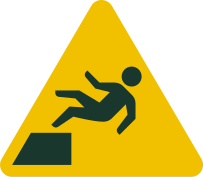
Falls from height
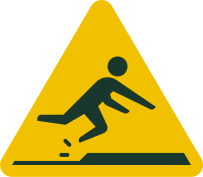
Slippery or uneven surfaces
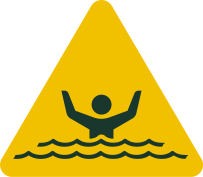
Deep water
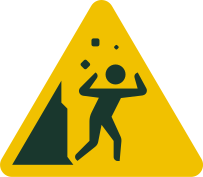
Falling masonry
Directions
Google MapPostcode NP7 8UD
what3words: ///link.whom.parked
Related
Unlimited access to Wales' past
Join Cadw for as little as £2.00 a month and gain unlimited access to over 100 historical sites.
Enjoy the many benefits of Cadw membership
- 10% off Cadw gift shops
- 50% off entry to English Heritage and Historic Scotland sites
- FREE entry to English Heritage and Historic Scotland on renewal
- FREE entry to Manx National Heritage properties
- FREE membership pack including car sticker and full colour map