Gwenllian ferch Gruffudd
In the face of Norman expansion in Britain in the late eleventh and early twelfth century, Gwenllian ferch Gruffudd emerged as a powerful symbol of Welsh defiance, courage and leadership.
Born into the royal house of Gwynedd, Gwenllian was the daughter of Gruffudd ap Cynan, a powerful and influential ruler whose leadership helped shape medieval Wales. Through her marriage to Gruffudd ap Rhys, Prince of Deheubarth, she became closely tied to the fortunes of south-west Wales at a time of significant political upheaval.
The Norman invasion had pushed deep into Deheubarth, forcing Gwenllian and her family into the rugged landscapes of Caeo in Cantref Mawr. Despite these challenges, resistance to Norman rule remained strong across Wales.
In 1136, during a widespread Welsh uprising, Gwenllian’s husband travelled north to rally support, leaving her behind with their young children and limited resources. When news reached her that Maurice de Londres, the Norman lord of Kidwelly, was gathering forces to tighten his hold on the region, Gwenllian made a bold and extraordinary decision.
Rather than wait for reinforcements, she took action.
Raising an army of her own, Gwenllian led her forces into battle against the Normans – a rare and courageous step for a woman in medieval Britain. Her leadership demonstrated not only determination, but a deep commitment to protecting her land, her people and her heritage at a moment of real danger.
The battle, fought near Kidwelly, ended in tragedy.
Gwenllian was defeated, captured and killed, reportedly on the battlefield itself.
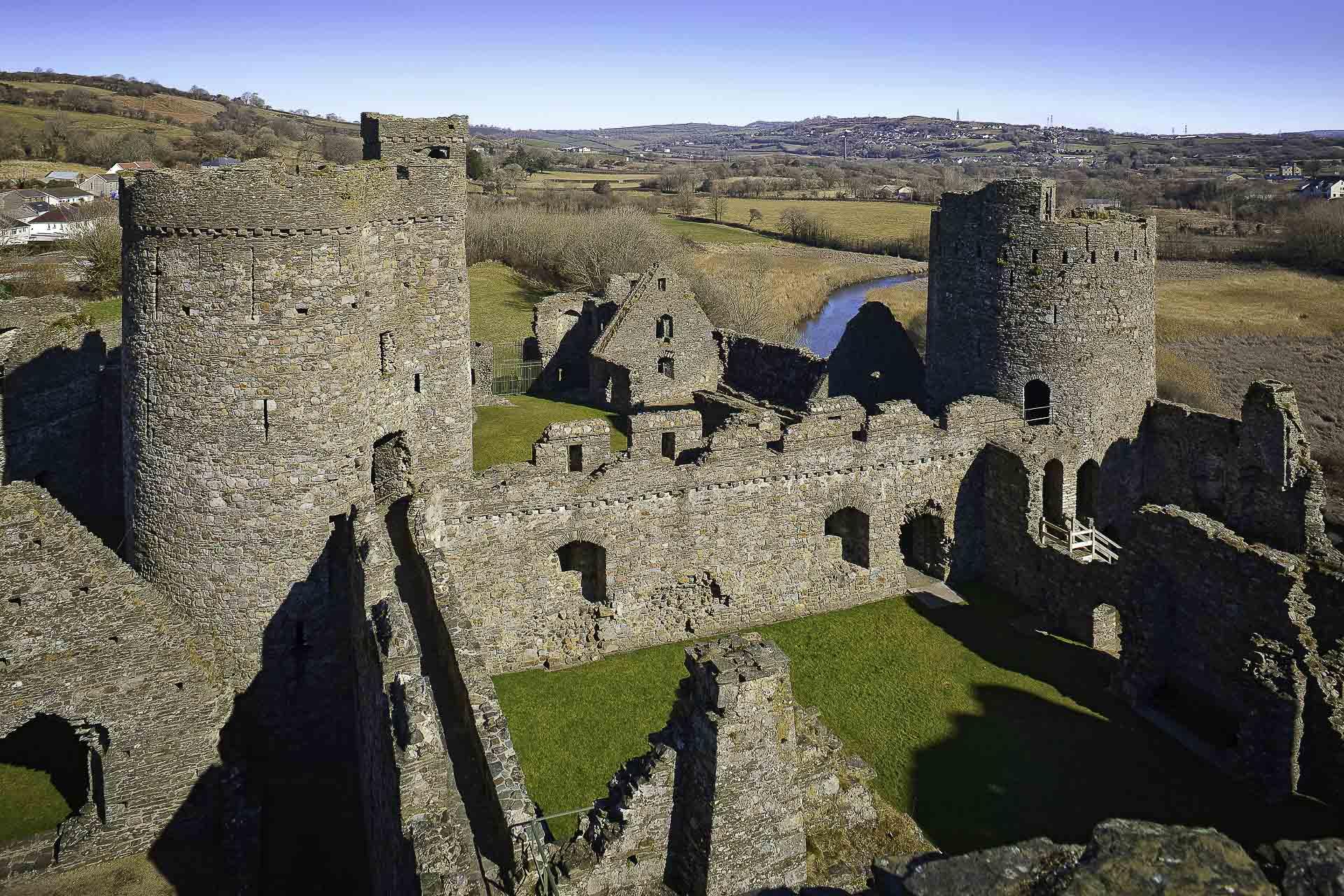
The site became known as Maes Gwenllian (the Field of Gwenllian), marking both her sacrifice and her bravery. Though her life was cut short, her actions resonated far beyond that day, becoming a story shared and remembered across generations.
Her legacy lived on through her son, Rhys ap Gruffudd, later known as The Lord Rhys, who became one of the most powerful Welsh rulers of the twelfth century. In the years that followed, he would reclaim territory and capture Norman strongholds, continuing the struggle his mother had so fiercely embodied, and strengthening Welsh identity and independence.
Today, Gwenllian ferch Gruffudd is remembered as a powerful symbol of resistance, resilience and leadership. Her story is one of courage in the face of adversity, and of fighting not for glory, but for home.
Visitors to Kidwelly Castle can see her memorial stone and reflect on the enduring legacy of one of Wales’ most inspiring historical figures.